Step inside Belgravia's Secret Gardens this June

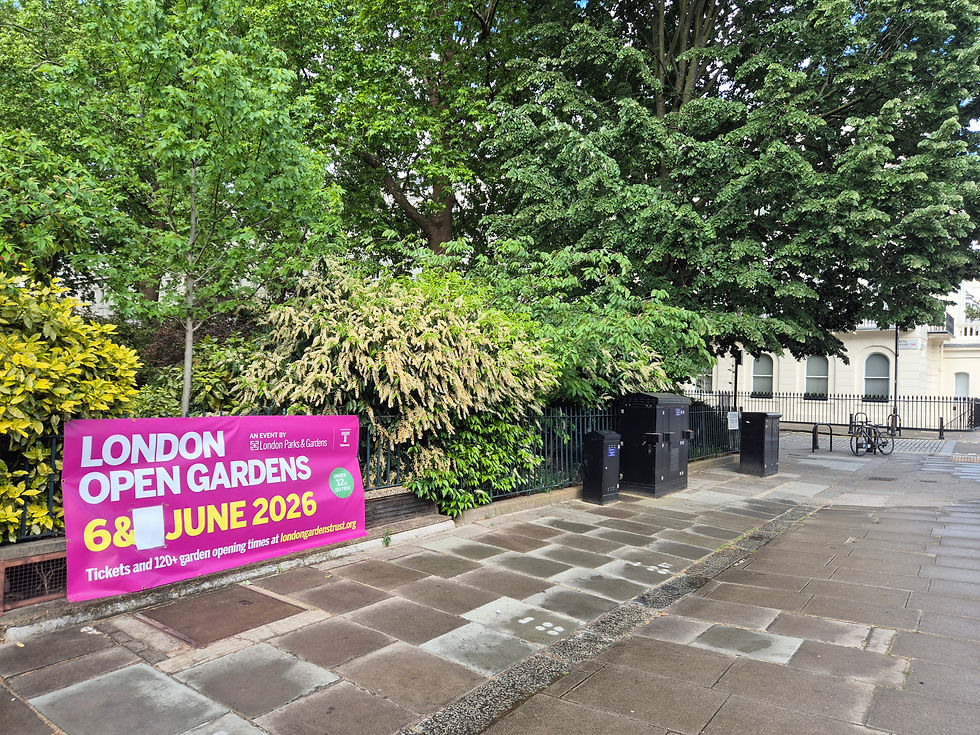
For one exceptional weekend on 6th and 7th June, Londoners and visitors alike will have the rare opportunity to explore some of the capital’s most beautiful private green spaces during London Open Gardens Weekend.
Organised by London Parks & Gardens Trust, the event opens the gates to more than 120 hidden gardens, historic squares and horticultural treasures that are normally inaccessible to the public. These include the magnificent garden squares of Belgravia in SW1 — landscapes that combine exceptional planting, architectural grandeur and centuries of London history.
The Enduring Beauty of London’s Garden Squares
The historic squares of Belgravia were created during the great 19th-century expansion of London under the Grosvenor Estate and master builder Thomas Cubitt. What had once been marshland and market gardens became one of the world’s finest residential districts, centred around elegant communal gardens designed to bring light, greenery and tranquillity into city living.
Today these gardens remain among the defining features of prime central London property — carefully maintained private landscapes surrounded by some of the capital’s most prestigious homes. It is well known that a property overlooking a garden square will achieve a higher price than one in a conventional street.

Eaton Square: Formal Grandeur and Mature Planting
Eaton Square is perhaps the best-known of Belgravia’s garden squares, comprising six linked gardens covering almost six acres.
London Parks & Gardens Inventory describes the gardens as characterised by formal lawns, perimeter shrubberies, mixed borders and impressive mature London plane trees, many dating back to the original 19th-century planting. Recent enhancements include sculptural water features and sundials by artist David Harber, while the gardens achieved Gold in London in Bloom 2024. https://londongardenstrust.org/conservation/inventory/
The surrounding architecture is quintessential Belgravia: grand white stucco townhouses, embassy residences and luxurious lateral apartments created from former mansions. Residents can become keyholders to the gardens — an increasingly rare privilege in central London.

Chester Square: A Classical Residential Enclave
Chester Square is still arranged as houses rather than flats and offers a quieter, more intimate atmosphere while maintaining the same architectural elegance.
The Inventory describes mature plane trees, herbaceous borders and a central rose garden enclosed by cast-iron railings. The larger western garden was restored to its historic 1867 layout, with original rope-edging tiles and some original trees still surviving today.
The square is framed by handsome Grade II-listed terraces and distinguished period residences. Literary history also runs through the square, with former residents including poet Matthew Arnold and Mary Shelley.

Wilton Crescent: Art, Sculpture and Cathedral-like Trees
Wilton Crescent 's crescent-shaped garden was added to Thomas Cundy’s original Belgravia masterplan and today combines horticulture with contemporary art. The garden features modern sculpture installations by Conrad Shawcross set beneath towering London plane trees described by the Inventory as “cathedral-like” in scale.
The elegant white stucco and stone crescent surrounding the gardens remains one of London’s most desirable addresses, combining architectural prestige with remarkable peace and privacy moments from Hyde Park Corner.
Cadogan Place North and South Gardens
Cadogan Place sits at the meeting point of Belgravia, Chelsea and Knightsbridge — one of the capital’s most internationally recognised luxury residential districts.
The communal gardens provide a green sanctuary surrounded by imposing, townhouses and contemporary super-prime apartments close to Sloane Street and Harvey Nichols. During London Open Gardens Weekend, visitors gain insight into the unique relationship between landscape and architecture that defines this part of London.
The gardens sit alongside the recently completed multi-million-pound transformation of Sloane Street — one of the most significant public realm improvements undertaken in central London in recent years. Led by the Cadogan Estate in partnership with Kensington and Chelsea Council, the project has reimagined what was once a heavily trafficked urban thoroughfare into a greener, calmer and far more pedestrian-friendly boulevard.
This evolution reflects a wider shift in prime central London living, where access to greenery, walkability and environmental quality are increasingly valued alongside architectural prestige. For residents around Cadogan Place, the combination of private communal gardens and an improved green public realm further enhances the appeal and long-term desirability of the surrounding properties.
Marlborough House: A Royal Landscape in the Heart of St James’s
One of the most historically fascinating openings this year is Marlborough House.
Originally designed by Sir Christopher Wren in the early 18th century for Sarah, Duchess of Marlborough, the house retains much of its original garden layout. The grounds are unusually expansive for central London and still reflect their 18th-century character, with broad lawns intersected by gravel paths, formal boundary beds and extensive shrubberies.
The gardens contain a remarkable collection of trees including magnolia grandiflora, London plane, horse chestnut, red oak, maidenhair and evergreen oak. Visitors can also discover Queen Alexandra’s pet cemetery, a revolving thatched summerhouse commissioned by Queen Mary and rare plantings from South Africa, Australia and New Zealand.
Today Marlborough House serves as the headquarters of the Commonwealth Secretariat, adding another extraordinary layer of political and cultural history to the site.

Why Green Space Matters More Than Ever
In prime central London, proximity to green space is far more than an aesthetic luxury — it has become a defining element of quality of life and long-term property value. Communal garden access offers residents a sense of openness, calm and wellbeing that is increasingly important in dense urban environments. These historic squares also create visual harmony and preserve the character of London’s most prestigious neighbourhoods.
For property owners and buyers alike, homes overlooking protected green spaces consistently command strong demand because they combine architectural beauty with access to nature at the centre of the city.
With decades of experience advising clients across Belgravia, Knightsbridge and Chelsea, Ames Belgravia understands the enduring importance of London’s garden squares in shaping both lifestyle and property desirability.
Plan Your Visit
London Open Gardens Weekend takes place on Saturday 6th and Sunday 7th June, with participating gardens across Belgravia, Chelsea, Westminster and beyond.
Further details and tickets are available via:
To learn more about prime residential property in Belgravia and the value of homes close to London’s historic green spaces, visit:

Comments